Showing posts with label wild leeks. Show all posts

Sunday, May 2, 2010

Wild Leek, Lovage & Potato Chowder


ORGANIC and GARDEN INGREDIENTS:
1 Tbsp (15 ml) olive oil
1 Tbsp (15 ml) butter
1 cup (250 ml) lovage or celery, sliced
2 cup (500 ml) leeks, light green and white part, sliced
6 good size potatoes, skin on, diced
1/4 cup (60 ml) wild rice
4 cups (1 liter) cold water
1/2 lb (250 grams) chicken breast - optional
1/2 tsp (2.5 ml) sea salt
1/2 tsp (2.5 ml) black pepper, freshly ground
1/2 tsp (2.5 ml) red chile pepper flakes, dried (optional temperature boost)
1 cup (250 ml) organic whole cow's milk - I used Harmony organic
1 cup (250 ml) + cheese like cheddar or Swiss
Sprigs of fresh lovage for garnish (or sliced green onions)
Vegetarian version - omit butter, chicken, milk and cheese and it will still be very good.  I have made vegan and lacto-vegetarian versions many times.

METHOD:
1. Heat olive oil and/or butter in soup pot over medium high heat.
2. Clean up the wild leeks.  Slice green and white part of leek and add to the soup pot.  I grew these leeks in the back yard - transplanted a few years ago from the forest.


3.  Add sliced lovage (or celery),  and the diced (skin on) potatoes as well as the dry wild rice and cold water.  The photo below is of a sprig of my garden lovage.


4.  Cut boneless chicken breast into bite-size pieces about 1 inch (2.5 cm) square.  Add to pot with the salt, pepper, and crushed red chili pepper flakes (optional).  Cover and simmer for 40 minutes or until potatoes and wild rice are tender.  Chicken is a nice addition to this soup but it is also very good without it.
5.  Mash potatoes in pot using a potato masher.  Mash half of the mixture to create texture and help thicken the soup.  Stir in the whole milk and grated cheese.  I have been using the Harmony organic whole milk.  It is 3.5% milk fat but I don't drink it - just for coffee and cooking.  If you haven't tasted organic milk you should try it - very sweet and delicious.


6.  To serve, garnish bowls of soup with a sprig of fresh lovage or other herb.  You can serve with additional grated cheese if you wish.


NUTRITION FACTS (per 1 1/2 cup - 375 ml serving): 260 calories, 10 g fat, 4 g saturated fat, 0 g trans fat, 35 mg cholesterol, 290 mg sodium, 29 g carbohydrate, 3 g fibre, 4 g sugar, 15 g protein.  %Daily Values based on a 2,000 calorie diet are 4% vitamin A, 50% vitamin C, 15% calcium and 10% iron.


© Nancy Guppy, RD, MHSc.  Visit me at www.chapmanslanding.com  


Try something new at my next cooking class - Meal from Oaxaca (Mexico) on Saturday June 5th.  The menu features fresh and vibrant foods with the flavours of Southern Mexico.  For registration and information please visit my website.


April's showers bring May flowers!


Saturday, May 1, 2010

Wild Leeks - a year of food by the season


The wild leeks growing on my property have been large enough to eat for a few weeks.  Not as big as a store green onion but large enough.  If you live up north just about when you see your first black fly it should reminded you that the wild leeks are probably large enough.  We just finished some delicious wild leek, potato and lovage soup this afternoon in a cooking class.  A real delight.

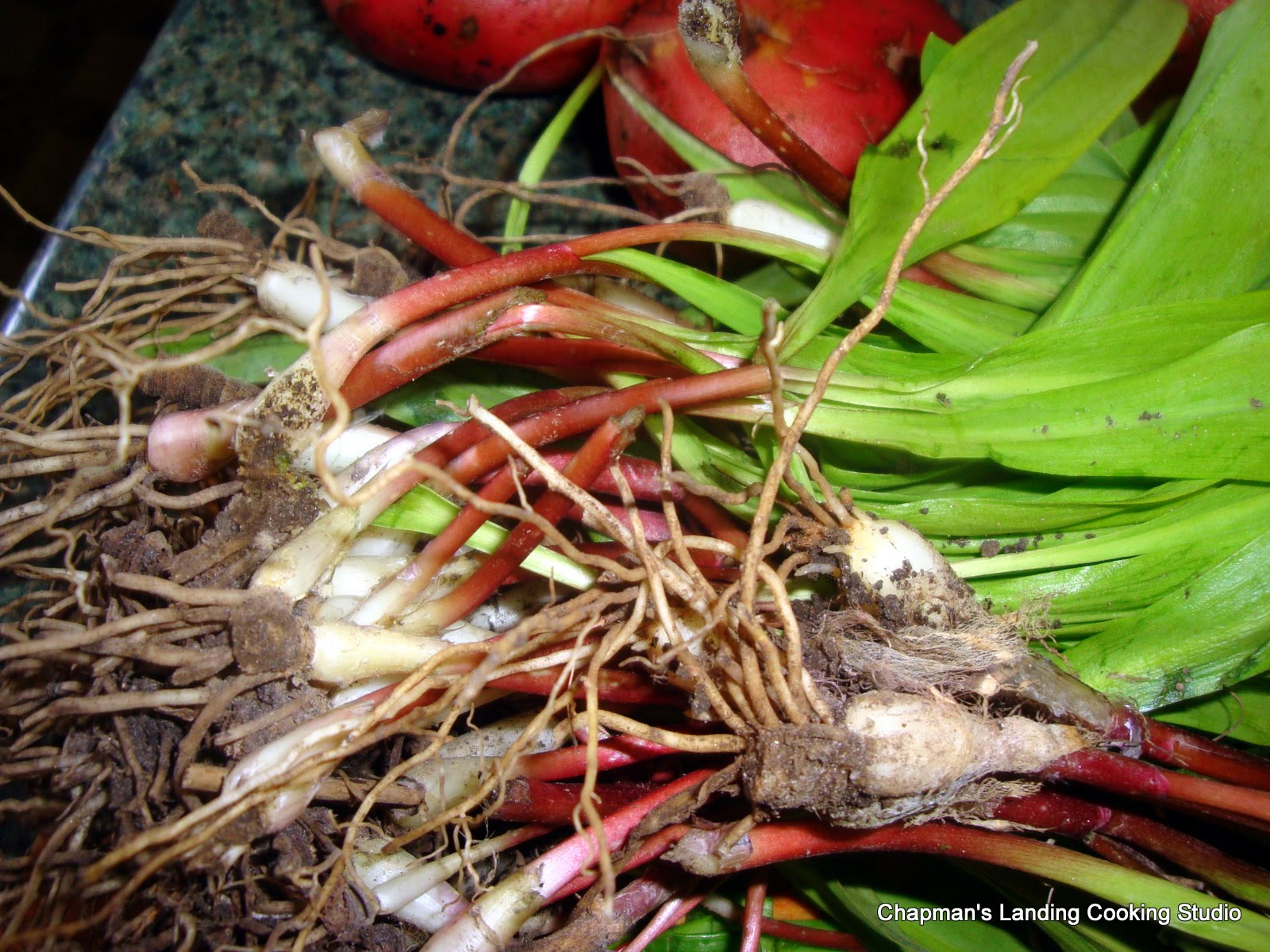
Where I live we call them wild leeks (allium tricoccum) but people also refer to them as wild garlic or ramps. I am not an expert on other wild leeks/ramps/garlic - there probably is a lot of variation depending on where you live.  I know they catch a big price in the city!  They are a type of wild onion with a bold flavour similar to that of garlic and onion and they are for sure one of my favourite spring foods from the wild.  Wild leeks are part of the lily family and you can see this when you look at the leaves above.

In my area I notice that they like deciduous woods that receive dappled light. The biggest leeks seem to grow near spring streams and running water. Around here they come up late April and are usually plentiful until the end of May. The photo shows some wild leeks I have transplanted onto my property a few years ago.  They keep dividing and every year I also add more new plants.  It has been so hot and dry lately that they are already receeding.  The foliage dwindles but the bulbs are still there to eat.

Foraging is a hot topic and "Canadian Living" magazine last year came out with an edible wild spring greens section with some good recipes in their May issue. The link below takes you to their important tips for safely foraging for wild edibles.

http://www.canadianliving.com/food/cooking_school/wild_greens_how_to_forage_in_your_own_back_yard_for_edibles.php


Leaves: garlicky onion flavour. Tear by hand or slice into strips.
Bulbs: slice like green onion or leek bulbs.

Below I put a good size bulb end against a pen so you can see the size.  There is a bit of a spot on my camera lense as I left it out in the garden one night by accident :)


Cleaning wild leeks is a bit of a chore but worth the effort. I wash them under cold running water and then I remove the outer soft layer and the very end with the roots.


The leaves and bulb can be eaten raw like green onions. Once picked they will keep for a few days in the refrigerator. Eat them sauteed with some butter or olive oil as a vegetable on their own. I know they work well in mashed or boiled potatoes, pesto, pasta dishes, soups, stews and stir fries. Pickled wild leeks are a delicacy for many people but I have yet to try them. I posted a recipe last spring for Maple Dijon Vinaigrette that is best made with wild leeks so you may want to try it.  If you don't have wild leeks make this delicious vinaigrette with green onions.

http://chapmanslanding.blogspot.com/2009/04/maple-dijon-vinaigrette-preferably-with.html

Freezing: Place clean leeks in suitable bags and freeze. Some people blanch and then freeze the leeks but in my experience this isn't a necessary step as long as you have carefully cleaned them under lots of cold running water. You can also gently saute the sliced leaves and bulb with butter or olive oil and freeze for later use.


© Nancy Guppy, RD, MHSc
www.chapmanslanding.com

Monday, May 4, 2009

Wild Leek and Warm Potato Salad


This week I am developing a series of simple recipes for a session I am doing soon with some of the teachers and high school students of the Near North School Board. I will help them learn more about healthy eating using local, seasonal foods. We will also use some foods that grow in the wild and are safe to eat.

This vinaigrette version of potato salad uses local honey, potatoes and wild leeks. I used last year's potatoes which were a bit raggedy so I peeled them. Had I been fortunate enough to have newer potatoes I would have boil them in their "jackets."

Makes 10 x 125 ml servings (1.25 liters)

10 medium size potatoes (about 6 cups) - 1.5 liter
1 cup wild leek leaves sliced or torn into strips - 250 ml
3 Tbsp local honey, heaping - 45 ml
2 Tbsp good mustard - 30 ml
2 Tbsp herb vinegar or other good quality vinegar - 30 ml
2 Tbsp olive oil - 30 ml

Cut the potatoes into cubes approximately 2 inches square (1 cm). Boil until fork tender and slightly mushy and drain. You can freeze the potato water for a nutritious vegetable broth for your next home-made soup.
Tear the garlic leaves into strips using your fingers (or slice into strips).
Whisk together dressing ingredients.
Toss very hot potatoes with the wild leek leaves and dressing. Serve warm. Garnish with more wild leeks if you wish.

Note: Adjust the dressing ingredients to suit your taste - if you prefer a less sweet salad you can reduce or omit the honey and/or increase the vinegar. I used a marjoram, purple basil and garlic vinegar blend I made up last summer when the herbs were fresh and plentiful. Cider or red wine vinegar would work well too.


NUTRITION FACTS (per 125 ml or 1/2 cup serving):
120 calories, 3 g fat, 0 g saturated fat, 0 mg cholesterol, 50 mg sodium, 23 g carbohydrate with 2 g fibre and 2 protein. %Daily Values are 35% vitamin C, 2% calcium and 6% iron.

Join me for a gourmet cooking class at Chapman's Landing Cooking Studio in Nipissing village.
© Nancy Guppy, RD, MHSc
www.chapmanslanding.com

Saturday, April 18, 2009

Maple Dijon Vinaigrette - preferably with Wild Leeks


This vinaigrette is amazing as a salad dressing but also as a marinade and grill basting sauce for onions, potatoes, squash and zucchini, chicken, lamb, salmon and pretty much anything else!!


This recipe features maple syrup as part of "a year of food by the season." But, the wild leeks are pretty special too! They won't come into season around here until approximately mid-May depending on how warm our spring is. I will feature them more then. If you don't have access to wild leeks you can substitute garlic and/or onion of your choice. I freeze a good supply of wild leeks so I can cook with them throughout the fall and winter. My favourite vinegar for this recipe is an organic balsamic but today I have used an organic apple-based cider vinegar. I also used a Honey Mustard from Board's Honey Farm.

I like the information on wild leeks show at:
www.ontariowildflowers.com/main/species.php?id=119

1/2 cup maple syrup - 125 ml
1/2 cup olive oil, extra virgin, cold-pressed - 125 ml
1/2 cup cider vinegar - 125 ml
1 Tbsp mustard (like Dijon or honey mustard) - 15 ml
1/2 cup leeks, bulb and lower leaf, chopped - 125 ml
1 Tbsp rosemary, minced (or fresh herb you have growing) - 15 ml

I puree the concoction using my stick blender and store it in a glass bottle with a lid in the refrigerator.


Nutrition Facts (per 14 g/15 ml serving): 50 calories, 4 g fat, .5 g saturated fat, 0 mg cholesterol, 5 mg sodium, 4 g carbohydrate with 3 g sugar, 0 g protein.